The first electric car, the first car sent to space, the car of the future. Does this description sound familiar?
Tesla was originally created as ‘Tesla Motors’ by two engineers - Eberhard and Tarpenning - in California, 2003. The founders started the company in hopes of successfully selling an electric sports car to the public, which General Motors (a large car manufacturer) had failed to do, before them. The following year, Elon Musk joined the journey, investing $30 million, making him the company’s chairman. This investment allowed Tesla to heavily invest in R+D, in order to come up with a battery that would make electric cars worth their cost.
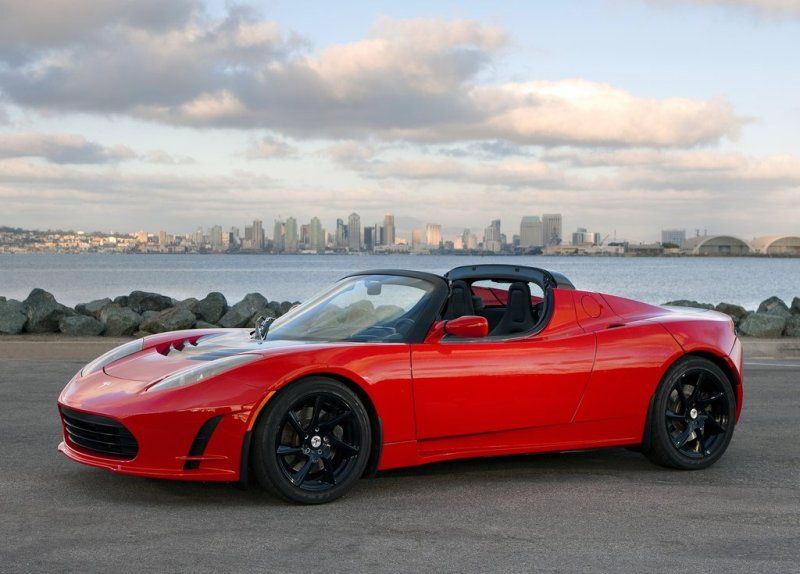
Tesla’s goal of producing a high-end, fully electric sports car – The Roadster – was finally achieved in 2008. The innovative Lithium-Ion battery Tesla implemented into its vehicles was revolutionary, due to its exceptionally high power to weight ratio. This meant that Tesla could add less weight to its cars but provide it with more energy per unit distance, than previous electric cars, which dramatically cut Tesla’s average cost per car. Prior to Lithium- Ion, electric cars were simply too expensive and slow, however, due to this technology, the Roadster was one of the fastest accelerating vehicles in its time. This made the Roadster a fashion statement in the car industry.
Despite this, 2008 was not all glitz and glamour for Tesla. It was also possibly its most challenging year, with the onset of the global financial crash. Tesla, at this time, was already looked down upon by the world due to its poor finances. It was incredibly short on cash, and the government were not willing to bail them out, like with other car manufacturers. Every expert believed that Tesla would just become another statistic. But that’s when Musk stepped in. He took a huge gamble, investing almost all his revenue from his other firms into Tesla. Furthermore, he took over as CEO and laid off 25% of the staff, including the two founders. Understandably, they were not happy with this decision, deciding to sue Tesla for forcing them out of the board, piling on to the mound of problems Tesla already had. Now, they not only had a losing lawsuit to fight, but an ever-increasing debt, fuelled by the recession, affecting its sales. Tesla was almost bankrupt.
Miraculously, just before Christmas, Musk managed to secure a $50 million investment from another car manufacturer, Daimler, keeping Tesla alive by the skin of their teeth. This was Tesla’s turning point.
By 2010, the damage that petrol cars were doing to the world was becoming apparent, and the government were keen to fix this issue. Fortunately, the government realised Tesla’s importance in a more environmentally friendly automobile market. The government jumped on this prospect, issuing grants worth $400 million and allowing Tesla to become the pioneers of the electric car industry.
Shortly after this, Tesla was finally listed on NASDAQ, the second largest stock exchange, after making its IPO public. This is when a private firm goes public by offering shares of its company for investors to buy. It allowed Tesla to raise capital via a method called equity financing. This is when firms sell shares of their company to buyers, providing them with a stake in the company, in return for money, meaning Tesla no longer had to borrow loans to raise finance (debt finance). This was crucial for Tesla’s new chapter, as it allowed them to increase investments in their supply chain, boost their productivity, and gain large economies of scale. This played an important role in increasing Tesla’s market share for it to become as dominant as it is today.
It is undoubtedly one of the automotive industry’s great success stories that Tesla, a company that, just a few years ago, was on the brink of collapse, went on to purchase one of the largest solar energy firms, Solar City. This increased Tesla’s influence on the energy market and made them a more diverse firm.
By 2015, Tesla was on top of its game, with a wider range of electrical cars, such as the iconic Model X. However, to most of the public, Tesla was still a luxury. Because of this, Tesla shifted its focus to producing an affordable electric car. This was when it came up with the Model 3 concept, a medium-priced vehicle, with Tesla’s latest features. Not only was this more affordable for consumers, but it was also premium quality. But, producing it was easier said than done.
Tesla was unable to produce its forecast output, and its production was hit with many setbacks and delays. This resulted in Tesla’s share price taking huge fall. This was worrying as when a firms’ share price falls, investors see the firm as being less profitable. This ultimately reduces the capital a firm can raise, which impacts several aspects of a firm, such as investment. Luckily, Tesla was able to resolve this setback and produce over five thousand Model 3s a week. Ever since, its production became heavily automated. Although its chain of production experiences faults now and then, it is very efficient and cost effective. This, along with several other factors, is what makes Tesla one of the largest and most influential companies in the world.
As you can see, Tesla has had to overcome major setbacks in its past such as narrowly avoiding bankruptcy, numerous lawsuits, and production setbacks. Elon musk once said, Tesla had “less than a 10% probability of succeeding”. Had it not been for his risk taking, the car industry may have been vastly different today. Despite this, Tesla continues to set optimistic goals in improving the world and continues to be at the forefront of R+D in the automotive industry.