UK Prime Minister Boris Johnson has recently outlined a plan to ban the sale of petrol and diesel cars by 2030 as part of the “green industrial revolution”1 to tackle the global climate change crisis and become a carbon neutral country by 2050. This decision follows from February, where the government already decided to bring forward the ban from 2040 to 2035.
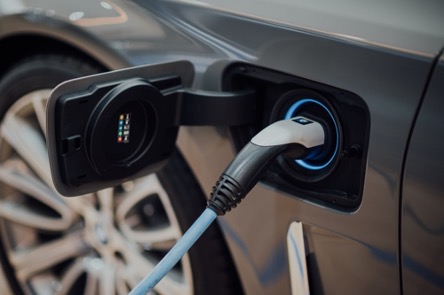
This ambitious plan will depend on electric cars, yet just 7% of cars sold in October were electric . Tom Heggarty, a principal analyst at Wood Mackenzie stated that “Getting to 100% will require a huge effort across the entire supply chain” and that there will need to be “enough fast charging infrastructure” available. Because of this, the government has made plans to fund £500 million towards electric charging infrastructure2 over the next 4 years to incentivise the use of electric cars. Currently, there are only 30,000 electric vehicle (EV) charging points in the UK, and it can take between 30 minutes to 10 hours for a full charge (depending on the power of the charging point). Most charging stations take over 6 hours to fully charge the vehicle as many are placed in parking areas, letting people charge their car while at work. Alternatively, richer individuals can charge their cars at home by buying an electric vehicle (EV) charging point which can be placed on the wall of a house. However, those living in flats or without driveways may struggle to charge their electric cars.
The cost is expected to be £20 per “tank of electricity” to use a commercial charging point, whereas those with the leisure of being able to charge at home will only incur a cost of £7 per tank. This causes income inequality for lower income households as it is likely to be impractical and expensive to use charging facilities, bearing in mind the high prices of EVs. Solving this cost disparity will require substantial government intervention to reduce the price of using a commercial EV charging point. If this issue is not solved by 2030, high EV prices and costs of use may exclude low-income earners from the car market, hence creating more inequalities and issues for low-income households, especially if public transport services are limited in the area.
Hybrid cars will continue to be sold until 2035 if they do not release carbon from the tailpipe to smooth the transition. Even so, producers may still not be ready for the UK’s plans. Car manufacturer Honda worries that the Prime Ministers’ plan is too ambitious, and that relying merely on battery powered cars after 2035 would be “too narrow”2; even though Honda states that all cars sold will be at least hybrid by 2022. Honda believes that there are “technological and resource constraints” making it difficult for all components in a car to be battery powered. Experts say that this could lead to an extension of the 2030 deadline.
Although there are questions about the country’s readiness for the ban, the decision is expected to provide 30,000 new jobs across many sectors including energy, EV battery manufacturing and as part of the charging infrastructure roll-out. A report by a Cambridge Econometrics research group on behalf of Greenpeace UK used macroeconomic models to predict the impact of this early ban on the UK economy. It established that government revenue would increase by £1.9 billion by 20305 due to increased employment and more economic activity. Furthermore, it is expected that a faster transition of the ban will increase GDP by 0.2%5. The government has decided to bring this deadline forward by 5 years to reduce the UK’s carbon footprint faster. However, the environmental benefits of switching to mainly electric powered cars over the next 20 years will depend on the energy mix of the UK. Currently 38.9% of energy is renewable and 41.7% is from fossil fuels . This means that if electric cars are mainly powered from fossil fuels, the positive environmental impact may be dampened.
Norway is an example of a country further ahead than the UK, with 1 in 7 cars being electric. They have achieved this by creating large incentives for consumers, such as a VAT exception, as well as no purchase or import taxes being imposed on EVs. Also, from 1999 to 2017, the Norwegian government removed parking fees for those with EVs and now have a minimum 50% discount. As well as this, they have resolved the issue of electric cars being powered by ‘dirty’ energy, as with 99% of their energy coming from hydropower, the vast majority of EVs are powered by renewable energy. The decision to ban the sale of petrol and diesel cars in 2030 is a vital step towards becoming a carbon neutral country and protecting our environment, yet the government must significantly increase investment in electric infrastructure and create more incentives for firms and consumers to both improve technology and reduce the cost of electric cars. If these plans are successful, the UK will be one of the first countries to depend solely on electric vehicles.