The Microfinance sector has coped reasonably well during the COVID-19 pandemic due to its large financial reserves despite the significant drop in the income of its clients. However, Microfinance Institutions (MFIs) should not sit idle as this crisis also presents an invaluable opportunity to help in the economic recovery post COVID.
Let us understand what Microfinance is and how it helps society: People on the lowest income (in developing countries) usually cannot avail of loans from traditional banks because they cannot meet their minimum balance stipulations. The Global Findex survey (2017) found that globally 31% of adults are unbanked and 20% of the unbanked cite poverty as the sole cause.
Research from the World Bank (New global poverty estimates for 2017) shows that an estimated 9.2 percent of the global population still live below the international poverty line (IPL). Due to the COVID-19 pandemic, this statistic is also expected to rise for the first time in over 20 years.
A significant number of such people in low-income households are likely to turn to loan sharks whose exorbitantly high interest rates do more harm than good trapping them further in debt.
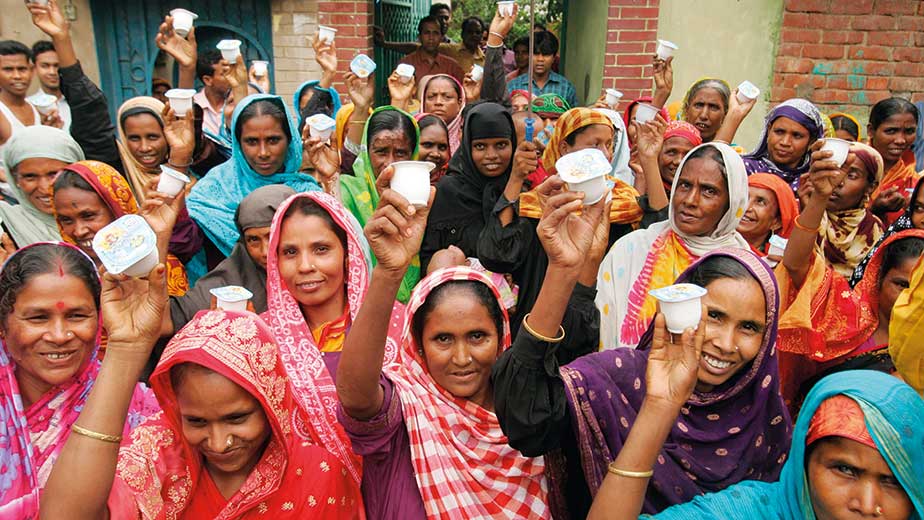
MFIs provide small loans to such people to start or run businesses and earn a stable income.
For loan repayments, some MFIs group clients (around 5-10) who will work together to repay an aggregate sum - if one member can’t pay their share, another member chips in and covers the deficit. One example of such an MFI is Grameen Bank set up by Mr. Muhammad Yunus in Bangladesh in the 1970s. A small group of borrowers from different households were given loans together which encouraged the members to help each other repay. MFIs also provide individual loans in addition to the group model.
The work of MFIs has had a significant positive impact on economies - many of the poorest people will get a higher income so they can consume better quality goods and services and experience higher living standards. The resultant multiplier effect on the economy increases GDP and reduces unemployment leading to economic growth.
Furthermore, Microfinance has had a significant social impact in developing countries - For example, Grameen Bank requires clients to follow its “16 Decisions” policy. This Policy stipulates discipline, unity, courage, hard work, family planning to keep families small, educating children and prohibition of child marriage and dowry.
As a testament to Mr. Yunus’ work, he was awarded the Nobel Peace Prize in 2006. Microfinance has been portrayed as an effective mechanism to alleviate poverty by giving people a source of livelihood. However, over the years, cracks have emerged in the system.
The COVID-driven income loss of 2020 has aggravated some problems caused by the grouping system that some MFIs use. If one person struggles to repay, other group members have to cover the deficit, reducing their income. But many people have suffered loss of incomes due to lockdowns globally. How can people repay their microfinance debts with such a sharp decrease in income?
Many MFIs also don’t account for possible economic instability in developing countries which causes significant price level fluctuations. Their fixed loan amounts and non-negotiable terms make repayment more difficult due to high and volatile inflation. A 2019 World bank report pegs the average annual Inflation in developing economies at 6%, compared to 2% for advanced economies.
A possible solution could be to tailor loan amounts and terms to each client. For example, Opportunity international (a worldwide MFI) in Malawi has issued loans with loan amounts and repayment terms tailored to each client. Clients hence borrow only what they need, increasing the chances of repayment.
Another flaw is that Microfinance loans are often being used for consumption reasons instead of micro-entrepreneurial projects. For example, a survey in Sri Lanka revealed that most respondents used microfinance loans to ‘smooth’ over rough times. This forced them to repay through waged labour, making them poorer than before.
But on the other hand, microcredit does offer access to money when the poor need it most. It might be for emergencies or to put food on the table. People can get a loan with small regular repayments and demonstrate their creditworthiness, making them eligible for bigger loans. This helps prevent families from selling income generating assets like land, livestock etc.
Closer scrutiny of microfinance loan applications may prevent them being used for discretionary items, reducing unnecessary loans and allowing higher income retention. Perhaps the most important aspect is that MFIs don’t always assess the impact of their policies on society. For example, Grameen Bank rates its branches every year by awarding stars for achievements - a green star if all clients successfully repaid their loans, a brown star if the children of borrowers attended school and a red star if all borrowers successfully moved above the poverty line. This incentivises each Grameen Bank branch to evaluate their policies and improve them.
However, despite its positive impact, this idea hasn’t been replicated in other MFIs; perhaps due to the lack of a stimulus to do so. To address this, the World Bank must create a Microfinance Index for Less Economically Developed Countries. MFIs can be scored based on this Microfinance Index with a reward or recognition at stake. This will motivate MFIs to analyse and improve policy trajectories, increasing MFI efficiency.
COVID-19 is expected to tip a lot of people into poverty. Therefore, MFIs must revise any flawed policies (like a flawed loan structure) to contribute towards helping low-income households recover from this economic crisis. They should then evaluate these policies each year and improve them to ensure that MFIs are fully prepared if such a damaging situation arises again.